23 August, 2011

No Rain, Now Rain

People blame climate change on the extremes in our weather but for me I find it difficult to explain how one moment there is a drought in rural France and the authorities are turning boats back along the Canal du Central yet we in the Canal entre Champagne et Bourgogne the rain appears every day and the canal is full of water. I do know that the canals of France are highly dependent upon the rain in the areas that feed them while the rivers we have traveled on are dependent not only on the rain but on the amount of snow that falls during the preceding winter.


To alleviate this dependency the designers of the canals during the last century developed some large dams to supplement the water supply. Four artificial lakes provide water for the Canal entre Champagne et Bourgogne. The most important is the reservoir of the Liez which can be seen from the walls surrounding the town of Langres. It is the largest artificial lake in France and was built in 1880 with a barrage 450 m long made of sand and earth with a protective covering of stone.


The reservoir of Saint Ciergues in the valley of Mouche, feed the canal in the area of the Marne while the reservoir at Charmes is slightly larger.


We passed the 1,200 metre dam wall at Villegusien when we stopped near Piepape. The total capacity of these four reservoirs is 43 000 000 m3 which was just not sufficient to get Malua over the sandbank at Langres. The rain that day just added to the disappointment. Our return on the rivers Saome and Rhome will not be dependent upon the rain or the flow of water in these rivers but in my skill at following the course of the channel within the river. I only hope the sun shines for now we need fine days to explore the land and enjoy riding to the vinyards along the route. For Malua and Sundancer II the driest summer in living memeory will always be in our thoughts when we talk about the depth under the keel over a glass of French wine.

Dijon, Kalamata, Seville

When I first purchased Kalamata olives I had no idea that they came from the Greek town on the first finger of the Peloponnese. Now as I slip one into my mouth I remember the great time we had at the market in the town purchasing olives from a number of vendors each with their own interpretation on how the real Kalamata olive should taste.


Last week while travelling south down the Saone river we stopped at Auxonne to take the train for a few days to Dijon. Why they make mustard at Dijon I still don't know but I can tell you it has a vastly different taste as it comes out the tap at the shop where they have made it since 1747 than that purchased in a jar. The maker is Moutarde Maille who now exports their products around the world even to Australia. When I next dip into a pot of Dijon mustard to put on my roast beef or ham I will remember the two days we spent admiring the old building and architecture of the city.


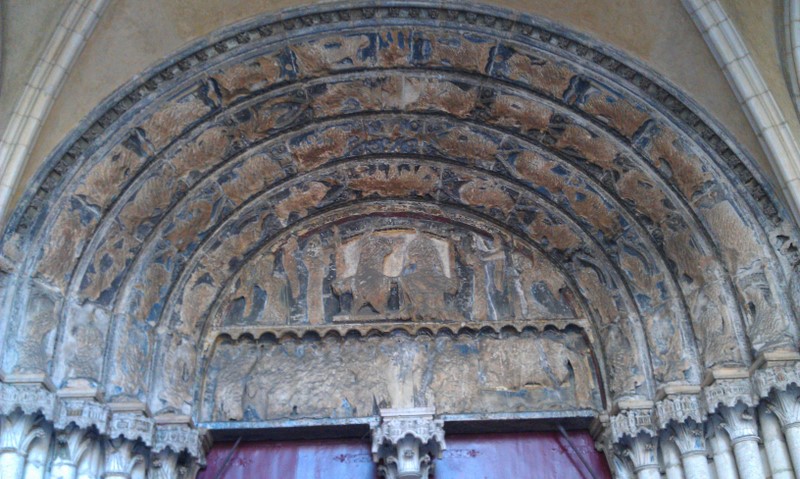
We took a tour with a guide to visit the outstanding buildings of the old city. It was fascinating to admire the different styles and them walk through the door into the inner court yard and the real building. They are all well preserved either by the current owners or by the city. The main church of Notre Dame is an impressive building. Unfortunately during the revolution a single revolutionary decided the carved figures on the front of the triple doorway reflected badly against the spirit of the cause and took it upon himself to chop each image off the façade and destroy the front of the building. Day after day he took his hammer and destroyed the stone carvings. Nobody stopped him and in the end they had all disappeared. Today the façade is just a mess but a good talking point for the guides. The triple line of gargoils where spared. Each has a different face - some human while other are animal like. Impressive if viewed from just under their spouts.


On the outside of the church there is a simple carving of an owl which is supposed to be lucky. It you touch it with your left hand - the closest to your heart, your wish will be granted. It, like the other figures, has been damaged but by a modern hoodlum only a few years ago.


Unfortunately the very good museum of art was closed on the two days we where there so I did not see the tomb of Philip the Bold or John the Fearless. Why cant USA or Australian generals have similar names? Petreus the flattened.

 What of Seville? We visited the area in the '70 when we where traveling through Europe in a Combi, so every morning when I eat my toast and Seville orange marmalade I remember the oranges we picked from the trees all those years ago. What town next?